Logo design and branding in Melbourne
Melbourne has a deep, crowded design market, so the useful step is comparing logo designers side by side.
Get a straight quote here, then put it next to 2 others before you decide anything.
Logo design in Melbourne is bought in a deep, crowded design market, so a buyer's real task is comparison.
Ask every studio you approach, this one included, for the concept count, the revision rounds, the handover files and the ownership terms in writing.
A quote through this page can cover any of the 6 services listed below.
Melbourne logo and branding quote
Free, and it takes under 2 minutes.
I’m Chris Lourenco, and Branding Services by Loudachris is the branding side of Loudachris Digital Marketing, my Adelaide studio for brand and website work.
I read every brief, quote on it and do the work myself.
Concepts, revisions and final files are all shared online, so a project runs the same way wherever you're based.
How it works sets out the full sequence.
The branding cost calculator covers what moves a price.
Websites I've rebuilt in Melbourne
Each one is a live website I rebuilt for an Australian business.
The town under each name is where that business actually is.
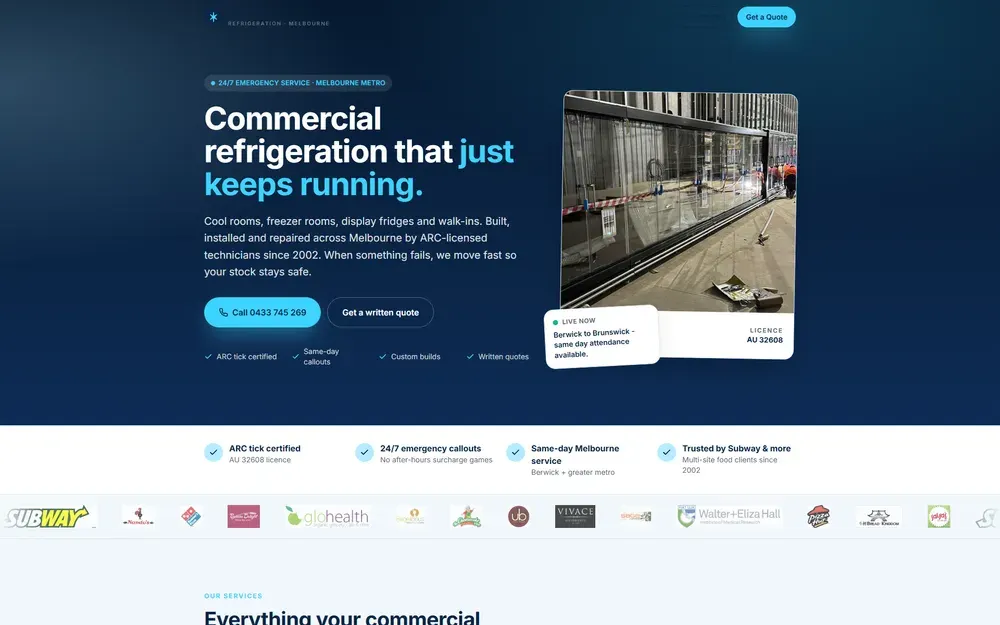
Website rebuild for Soft Cool
Commercial refrigeration · Melbourne
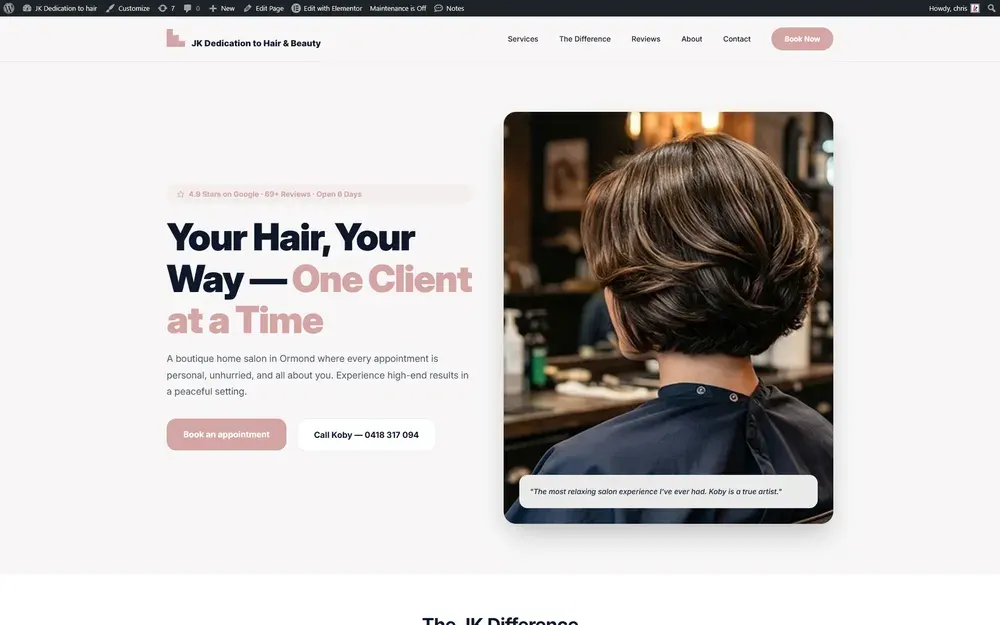
Website rebuild for JK Dedication to Hair
Hairdresser · Ormond, Melbourne
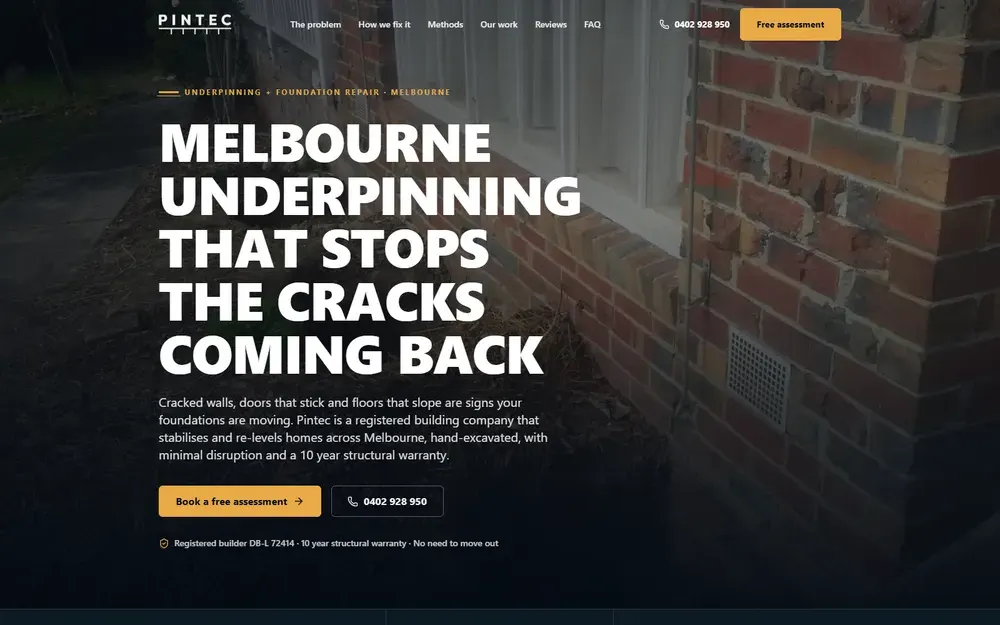
Website rebuild for Pintec
Underpinning & foundation repair · Melbourne
How to read a logo presentation in a city full of good ones.
Melbourne portfolios are polished across the board, so a slick presentation tells you little about whether a logo will work.
Ask to see each concept at the sizes it'll really be used: a browser tab, a social avatar, a business card and a shopfront sign.
Ask for it in 1 colour and reversed out of a dark background, because those versions show whether the idea lives in the shape or only in the colour.
Ask what the mark is built on, whether that's a custom drawing, a modified typeface or a licensed font, because the answer affects what you own outright and what carries a licence.
A concept that holds up through all 3 checks is worth more than the most striking slide in the deck.
More choice calls for a sharper comparison.
Melbourne has a deep pool of independent design studios, alongside the local arms of the large agency groups, a long tail of freelancers and a steady supply of graduates from long-established design schools.
For a buyer that abundance is good news and a real test at the same time.
You'll find 10 people willing to quote with ease.
Working out why 1 of them costs a great deal more than another, for what reads on paper as the same brief, takes more effort.
The quality spread is wider here than in a smaller market, and it's hard to see from the outside.
A confident portfolio site, good photography and a well-written process page are table stakes.
Judge each studio on how its work performs on your printer, your website and in your staff's hands, which comes down to scope and process.
The 5 questions that explain a price gap.
Get at least 3 quotes in Melbourne.
It costs you a few emails and it's the most useful thing a buyer can do in this market.
Then put the same questions to every one of them, because a price difference is nearly always a scope difference that nobody has spelled out.
How many concept directions are presented, and are you seeing 1 considered route or 3 to choose between?
How many rounds of revision are included before hourly rates start?
What's actually handed over at the end: working files, or exports only?
Is a guidelines document included or quoted separately?
And who owns the artwork and the intellectual property once the final invoice is paid, and is that written down?
A quote for 1 direction, 2 rounds and export-only handover is a different product from a quote for 3 directions, unlimited rounds, full working files and a guidelines document.
Both can be entirely fair.
Compare them line by line and the price difference usually explains itself.
Fit-out timing, signage rules and the brief to write down early.
Hospitality and retail density is a lot of what people mean when they call Melbourne a design city, and those briefs behave differently from a professional services identity.
The branding is usually tied to a fit-out, which ties it to a lease, a builder's program and an opening date that has often already been announced.
The design has to fit that date.
That has 2 practical consequences.
Work backwards from the opening date and include signage fabrication and installation lead times, because signage is regularly the last thing ordered and the longest thing to arrive.
And check what you're allowed to put on the building before the design is finalised.
Many inner-Melbourne shopping strips sit inside heritage overlays or local signage controls, and councils differ on size, illumination, projection over a footpath and what may be fixed to an older facade.
Your council's planning team will tell you, and asking before sign-off keeps the artwork inside the rules first time.
The deliverable list for a venue also runs longer than most first-time operators expect: signage, menus in more than 1 format, takeaway packaging, uniforms, table and window graphics, and a social presence that still reads at thumbnail size.
Each has its own production requirements and supplier.
Ask for the whole list in the first brief.
Geelong, Ballarat, Bendigo and the coast.
Geelong and the Surf Coast, the Mornington Peninsula, Ballarat, Bendigo, the Goulburn Valley and regional Victoria are all within scope, and an online brief puts a regional business on the same footing as one in Fitzroy.
If it applies to you, name 1 more thing in the brief: whether you're selling to your own town or selling into Melbourne from a regional base.
Those are different jobs.
A Bendigo business trading locally is building recognition with people who'll encounter it repeatedly, and it can afford to be understated.
A producer shipping into Melbourne retail is competing on a shelf against brands the buyer already knows, and has a couple of seconds to be noticed.
Same designer, different job, so say which one you have.
Services a Melbourne brief can cover
Logo design in Melbourne: common questions
Almost always because they're priced on different scopes.
Concept count, revision rounds, what gets handed over, whether guidelines are included and who ends up owning the artwork are all variables, and 2 studios can price the same conversation as 2 quite different jobs.
Ask all of them the same questions in writing and the gap usually explains itself.
If it still doesn't, that tells you something useful about how the project would be run.
Ask, because it varies and it's one of the more important things to compare.
Some designers present a single considered direction with the reasoning behind it and refine from there.
Others present 2 or 3 and let you choose.
Both approaches are sound.
A quote for 1 direction and a quote for 3 simply aren't comparable on price alone, and that difference explains most of the price gaps in this market.
Feedback you send at 9am in Melbourne lands at 8:30am in Adelaide all year round, and a logo project runs online either way.
I've rebuilt websites for Melbourne businesses including Soft Cool, JK Dedication to Hair and Pintec, which are shown on this page.
Use the quote as 1 of the 3 you compare, and choose whichever studio fits the project best.
The process is the same and the list is longer.
A venue identity has to carry across signage, menus in more than 1 format, packaging, uniforms, window and table graphics, and a social presence, and each of those has its own production requirements and supplier.
It's also usually locked to a fit-out program and an opening date.
Say both in the brief, because the deadline changes the sequencing as much as the deliverables change the price.
Frequently, yes.
I'm not a planning consultant, so treat this as a prompt to check rather than advice.
Signage on a shopfront can be subject to local planning controls, and inner-Melbourne strips in particular often sit within heritage overlays that affect size, illumination, projection over a footpath and how anything may be fixed to a facade.
Requirements differ between councils.
Ask your council's planning team what applies at your address before the design is signed off, and pass the answer on so the artwork is drawn inside the limits.
Who you sell to.
Geelong, the Surf Coast, the Mornington Peninsula, Ballarat, Bendigo and the wider regions are all briefed the same way, and the detail worth adding is your buyer: a business trading to its own town and a producer pushing into Melbourne retail are aiming at different audiences, and that distinction changes the design far more than the postcode does.
Ready to brief your Melbourne project?
Tell me what the Melbourne job involves, and I aim to reply within 1 business day.